A great meal deserves a great ending. Dessert is where cooking becomes celebration — where technique meets indulgence and a single plate can leave a lasting impression. But desserts don't require restaurant-level training to execute well. Understanding a handful of foundational techniques unlocks the ability to create stunning sweet dishes at home, consistently, without anxiety.
Just as a savory cook relies on mother sauces, a pastry cook builds confidence on a small set of core preparations. Master these, and you'll find yourself improvising with the same freedom that experienced bakers seem to possess. Let's start with the five dessert mother sauces — the building blocks that underpin most of the sweet world.
The Five Mother Sauces of Desserts
In the pastry kitchen, there are five foundational preparations that function as mother sauces — the templates from which dozens of variations branch:
Custard — Eggs + milk or cream, gently cooked until thickened. This includes crème brûlée, vanilla pudding, and quiche Lorraine. The key to custard is gentle, low heat; too high and the proteins seize and scramble. A properly cooked custard should coat the back of a spoon with a silky sheen.
Buttercream — A fat (butter) emulsified with a sugar syrup or powdered sugar base. French buttercream uses a cooked sugar syrup poured into whipped egg yolks. Italian buttercream uses a hot sugar syrup whipped into meringue before butter is incorporated. American buttercream is the simplest — butter beaten with powdered sugar and flavoring. Each has a different texture and sweetness level, suited to different applications.
Pastry Cream — A cooked custard thickened with cornstarch, yielding a lush, pipeable cream used to fill éclairs, tarts, and layered cakes. It's pastry cream that makes a napoleon sing. The addition of cornstarch gives it body and stability that a simple custard lacks, and it can hold up for days in the refrigerator without weeping.
Meringue — Whipped egg whites stabilized by sugar. French meringue is the simplest — raw whites whipped with sugar, then baked. Italian meringue cooks sugar to hard-ball stage and pours it into whipping whites for a stable, glossy product. Swiss meringue is heated over a double boiler before whipping for a silky texture. Each serves different purposes, from topping pies to forming the base of modern entremets.
Ganache — Chocolate + cream, in varying ratios. Equal parts by weight creates a glossy, pourable sauce. More chocolate than cream produces a thick, sliceable truffle consistency. Ganache is infinitely versatile: pour it warm over a cake for a drip effect, whip it for a lighter frosting, or let it set into chocolate squares. The quality of chocolate you use directly determines the quality of your ganache.
Understanding Sugar Stages
Working with sugar syrups is fundamental to candy-making and many dessert preparations. When you heat sugar and water together, it passes through distinct stages, each named for how the syrup behaves when dropped into cold water:
| Stage | Temperature | Cold Water Test | Uses |
|---|---|---|---|
| Thread | 230–234°F / 110–112°C | Forms threads in water | Floral syrups, fruit glazes |
| Soft Ball | 234–240°F / 112–115°C | Forms soft ball that flattens | Fudge, marshmallows, fondant |
| Firm Ball | 245–250°F / 118–121°C | Forms firm but pliable ball | Caramels, nougat |
| Hard Ball | 250–266°F / 121–130°C | Forms hard ball that holds shape | Butterscotch, divinity, saltwater taffy |
| Soft Crack | 266–270°F / 130–132°C | Stretches into flexible threads | Hard candies, lollipops |
| Hard Crack | 300–310°F / 149–154°C | Brittle threads that shatter | Brittle, toffee, glass candy |
| Light Caramel | 320–338°F / 160–170°C | Golden amber color | Caramel sauce, flan |
An accurate candy thermometer is indispensable here — sugar stages are separated by as little as 5 degrees, and the difference between perfect fudge and grainy caramel is a matter of seconds and degrees.
Custard Troubleshooting
Custard is one of the most rewarding preparations in the dessert kitchen — and one of the most commonly feared. The horror stories are familiar: grainy texture, curdled appearance, rubbery consistency. But these problems are all preventable once you understand what causes them.
Grainy custard typically results from two causes: overheating, which causes the proteins to tighten and squeeze out moisture, or insufficient sugar, which reduces the protective effect sugar has on protein coagulation. The fix: cook over gentle heat (never above 185°F / 85°C for stirred custards), and ensure your sugar is fully dissolved before adding eggs.
Scrambled or curdled custard happens when the mixture gets too hot too fast, causing the eggs to coagulate in large clumps. This can sometimes be salvaged by straining immediately through a fine-mesh sieve and whisking vigorously to break up the clumps — but it's always better to prevent. If making a baked custard, place it in a water bath (bain-marie) to buffer the oven heat.
Weeping — the layer of liquid that pools on top of a refrigerated custard — is caused by undercooking or improper gelling. A properly set custard has a slight jiggle in the center when nudged. It will continue to set as it cools.
Chocolate Tempering Basics
Tempering is the process of melting and cooling chocolate to specific temperatures while maintaining proper crystal formation. A properly tempered chocolate has a glossy sheen, a firm snap when broken, and melts smoothly on the tongue. Untempered chocolate blooms (gets white streaks or spots) and has a waxy texture.
For dark chocolate, the ideal temper is around 88–90°F (31–32°C). Milk chocolate runs slightly lower, around 86–88°F (30–31°C). The seeding method is the most forgiving for home cooks: melt two-thirds of your chocolate to 115°F (46°C), then stir in the remaining third piece by piece, allowing each addition to melt and lower the temperature before adding the next. Continue until the chocolate reaches working temperature. The solid chocolate introduces stable cocoa butter crystals that seed the rest of the batch.
Properly tempered chocolate is what gives bonbons their snap, makes chocolate-dipped strawberries glossy, and allows you to create those beautiful drip effects on cakes.
Whipped Cream Perfection
Whipped cream seems simple, but the difference between stable, billowy peaks and grainy, over-whipped butter is surprisingly narrow. Use cold heavy cream (the colder, the better — even chill your bowl and whisk), add a touch of vanilla and a pinch of salt to enhance flavor, and begin whipping on medium speed.
The stages happen fast: soft peaks first (curves that droop when the whisk is lifted), then firm peaks (clean peaks that hold their shape but tips curl over), then over-whipped (grainy, clumpy, on the way to butter). If you accidentally over-whip, you can sometimes rescue it by adding a splash of fresh unwhipped cream and folding gently.
For stabilized whipped cream — which holds its shape for hours and is ideal for piped decorations — fold in a tablespoon of instant vanilla pudding powder per cup of cream. It won't affect the flavor noticeably but gives the cream remarkable structural integrity.
Making Caramel Without Crystallization
Crystallization is the nemesis of smooth caramel. When sugar crystals form, caramel becomes gritty and unpleasant. Preventing crystallization requires understanding what causes it: stirring the mixture once it's boiling introduces seed crystals from the spoon and sides of the pan.
The solution is simple: don't stir after the boil begins. Instead, swirl the pan occasionally to redistribute heat. A wet pastry brush wiped along the sides of the pan above the syrup line dissolves any crystals that might form there. If crystals do form, don't stir — instead, add a tablespoon of water and swirl to dissolve them before continuing.
For the creamiest caramel, add cream off heat rather than to boiling syrup — this prevents splattering and gives you more control over the final texture. Always have your cream warm before adding it to hot caramel.
Fruit-Based Desserts and No-Bake Options
Some of the most satisfying desserts require little to no cooking, relying instead on the natural sweetness and beauty of fresh fruit. A crostata — essentially a freeform fruit tart — requires only a simple press-in crust and a few minutes of arranging fruit on top. Poached pears in red wine or spiced syrup turn humble fruit into something regal. A bowl of mixed berries with a dusting of sugar and a squeeze of lemon, left to macerate for 30 minutes, creates its own luminous sauce.
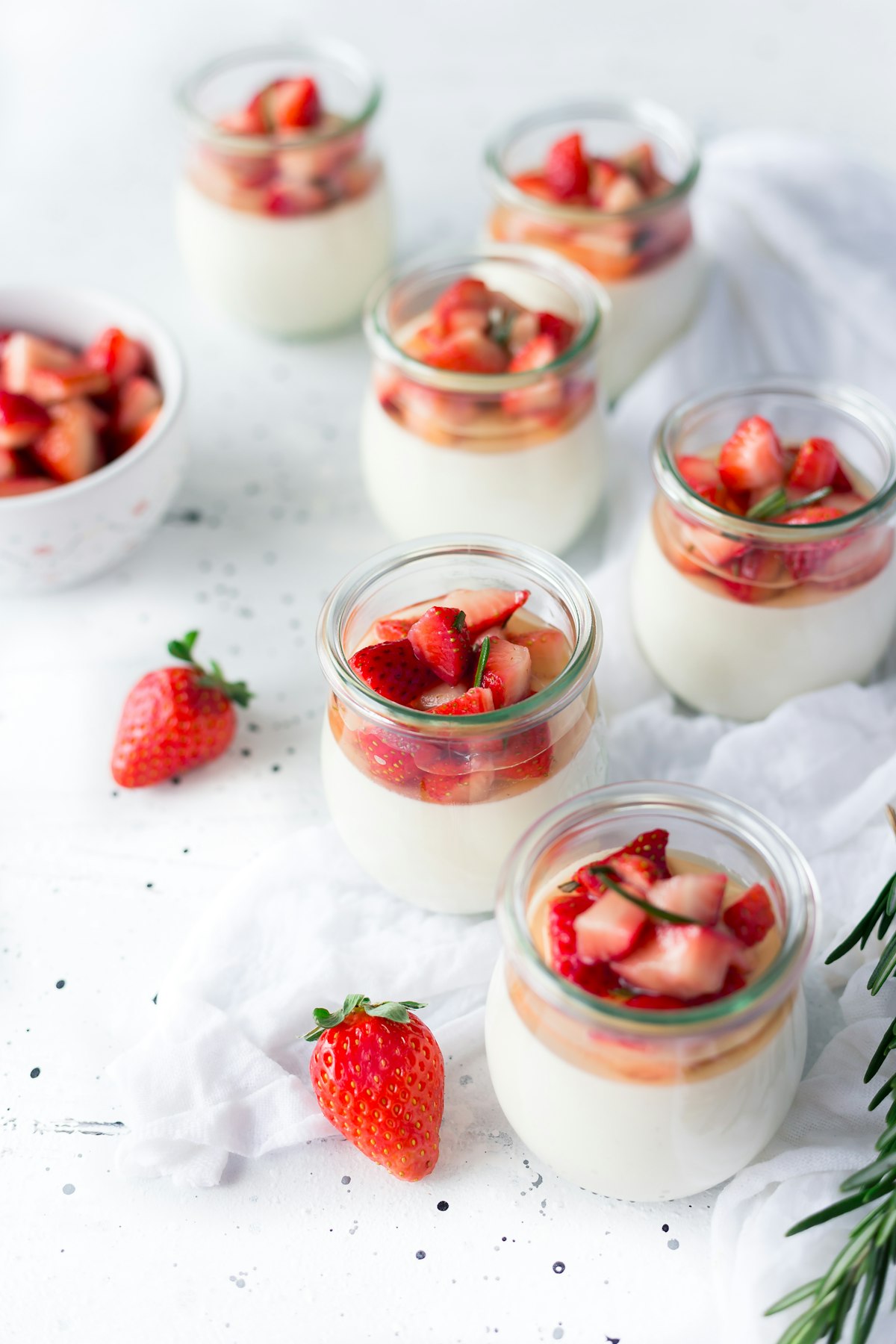
No-bake desserts are especially valuable in hot weather or when you're short on time. Tiramisu, the classic Italian no-bake dessert, layers coffee-soaked ladyfingers with a rich mascarpone cream. Panna cotta — cream gently set with gelatin and vanilla — unmolds into elegant quivers when you tap the plate. Both can be made ahead and refrigerated, making them ideal for dinner parties where you want to minimize last-minute stress.
Plated Dessert Presentation
When it comes to plated desserts, the rule is less is more. A single perfect element on a clean plate makes a stronger statement than three competing components. Use negative space deliberately — the blank area around your dessert is as important as the dessert itself.
Height is your friend. Stack elements vertically rather than spreading everything flat. A quenelle of ice cream perched on a slice of cake, a tuile cookie leaning against a mousse — these touches add sophistication without complexity. A sauce should be applied with intention: a swoosh with the back of a spoon, a few drops, or a delicate drizzle. The plate is your canvas, and restraint is the mark of confidence.
Balancing Sweetness
One of the most common complaints about homemade desserts is that they're "too sweet." Balancing sweetness is an art, and the tools at your disposal are salt, acid, and bitterness.
Salt is not just a savory seasoning in desserts — it amplifies all other flavors and cuts through sweetness in a way that makes the overall taste more complex. A pinch of fleur de sel on a chocolate truffle isn't decoration; it's flavor engineering.
Acid — lemon juice, zest, or even a splash of vinegar — brightens desserts and provides the contrast that makes sweetness register as pleasant rather than cloying. This is why lemon curd works so well alongside rich chocolate, and why a berry coulis makes vanilla ice cream sing.
Bitterness from dark chocolate, espresso powder, or bitter orange zest provides the final dimension that elevates a dessert from sweet to sophisticated. The best desserts aren't just sweet — they're a conversation between sweet, salty, sour, and bitter, with each element in balance.
The fundamentals of dessert are ultimately about understanding the building blocks well enough to improvise freely. Once you know how custards thicken, how sugar behaves at different stages, how fat and chocolate interact, and how to balance flavors — you're no longer following recipes. You're creating.