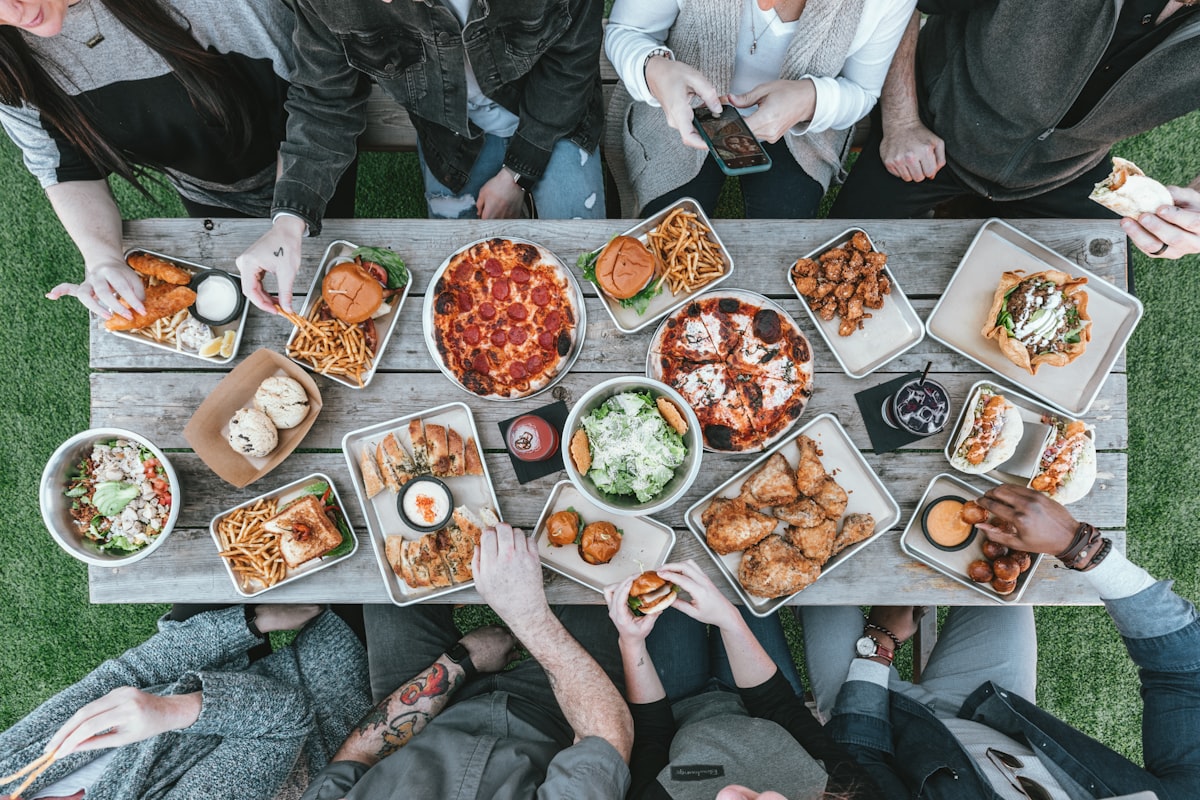
The holiday feast is one of the most anticipated meals of the year — and one of the most dreaded to prepare. The combination of high expectations, multiple dishes, shared oven space, time pressure, and family dynamics can transform the kitchen from a place of joy into a source of stress. But it doesn't have to be that way. The difference between a chaotic, frantic holiday cooking experience and a smooth, enjoyable one is almost always a matter of planning.
This guide is about building that plan. Not just a list of dishes, but a comprehensive system that accounts for what goes in the oven when, which dishes can be made days ahead, how to manage the oven bottleneck that plagues every holiday kitchen, and how to feed your family from the leftovers for a week afterward without anyone feeling like they're eating the same meal on repeat. Let's plan this feast properly.
Menu Planning: Three Weeks Ahead
Start your planning three weeks before the holiday. This is when you finalize your guest count, confirm dietary restrictions, and begin constructing your menu around the constraints of your kitchen and oven.
The first question is always: what is the centerpiece? For most Western holiday traditions, this is a roasted turkey, a glazed ham, or a prime rib. Everything else — the sides, the starches, the vegetables, the sauces — orbits this centerpiece. Once you've chosen your main protein, build the menu around it. The rule of a satisfying holiday plate is: one protein, one or two starches, two or three vegetables, one or two sauces or condiments, bread, and one or two desserts. This is six to ten dishes total, which is ambitious but manageable for a skilled cook with proper planning.
Account for dietary restrictions at this stage, not after you've built your menu. If you're hosting a vegetarian, make sure your centerpiece can accommodate them — a stuffed squash or a well-made mushroom Wellington — rather than treating their dietary needs as an afterthought. If someone is gluten-free, have at least one dish that is naturally so (roasted vegetables, mashed potatoes, cranberry sauce). These accommodations are not burdens; they're the marks of a generous host.
How Much to Make Per Guest
Over-preparing is always better than under-preparing at a holiday meal — leftovers are a feature, not a problem. Here are the standard portions per guest for a complete feast:
- Protein: ½ to ¾ pound of raw bone-in meat, or ¼ to ½ pound boneless (because boneless has less waste)
- Starches: ½ cup per person of mashed potatoes, stuffing, or grain dishes
- Vegetables: ½ cup per person for each vegetable dish
- Sauce/gravy: 2–3 tablespoons per person
- Bread: 1–2 rolls per person
- Dessert: One generous slice of each dessert, plus 10–15% extra
- Drinks: Plan for 2 drinks per person in the first hour, then one per hour thereafter
For a family of eight with four adult guests and four children (assuming children eat roughly half portions), you're cooking for the equivalent of six adults. This means approximately 4–5 pounds of bone-in turkey breast or 12–14 pounds of whole turkey, and proportional amounts of everything else.
Make-Ahead Dishes Strategy
The most important strategy in holiday cooking is moving as much work as possible away from the day-of. Every dish you can prepare ahead is a problem solved on the day when oven space and your attention are at a premium.
These dishes can be made two to three days ahead:
- Cranberry sauce: Absolutely, and it tastes better made 2–3 days ahead. Store in the canning jar you used, or in an airtight container. It keeps for two weeks refrigerated.
- Pie crust: Make and refrigerate or freeze the dough days ahead. Pie filling can be made the day before and refrigerated. The pie itself assembles and bakes in under an hour on the holiday.
- Stuffing/dressing: Everything except baking it can be done two days ahead. Sauté the vegetables, toast the bread, prepare the broth. On the day, combine and bake.
- Gravy base: Roast the turkey neck and giblets, make a rich stock, and refrigerate for up to three days. On the day, finish the gravy with the drippings from your roasted turkey.
- Green bean casserole: Assemble without the fried onion topping (which would become soggy), refrigerate, and add the crispy onion topping for the last 15 minutes of baking.
Cooking Order for the Day
Here's the cooking order that will save your sanity. Working backwards from the moment you need to serve dinner:
3 days before: Thaw turkey in refrigerator (approximately 24 hours per 4–5 pounds). Make cranberry sauce and pie crusts. Confirm all shopping is done.
2 days before: Prepare vegetable components for stuffing, prep and refrigerate. Make pie fillings. Prepare any make-ahead sauces.
1 day before: Make stock from turkey neck and giblets. Assemble green bean casserole (without topping). Set the table, or at minimum, decide exactly what you're doing with the table. Chill beverages. Review your timeline.
Morning of: Prepare everything that can be prepared: set out ingredients, label your dishes, confirm all equipment is functional. Make pie(s) early in the day while the oven is free.
Oven Management with Multiple Dishes
The oven is the single biggest bottleneck in holiday cooking, and managing it is the key to a stress-free day. Here are the strategies that work:
First, know your oven's real temperature. Buy an inexpensive oven thermometer and verify that your oven runs true. Many home ovens run 25 degrees off from the dial reading, which can ruin your timing. If you're doing a lot of baking and roasting, consider a second oven if you have a spare (even a countertop convection oven can handle pies and side dishes), a roasting pan with a rack that allows two dishes stacked, or cooking everything that can be cooked on the stovetop or at room temperature on the counter first.
Build a master oven schedule that maps out which dish goes in at what time and comes out when. The centerpiece (turkey or ham) always gets pride of place in the oven. Side dishes that can be served at room temperature — cranberry sauce, some salads, bread — don't need oven time at all. Sides that need 30–45 minutes can often be finished while the turkey rests.
Turkey/Ham Timing Chart
For a whole turkey (stuffed, unstuffed — unstuffed cooks faster), the rule is approximately 15 minutes per pound at 325°F (165°C). A 16-pound turkey needs about 4 hours. Here's a practical chart:
| Turkey Weight | Approx. Cook Time (unstuffed) | Approx. Cook Time (stuffed) | Resting Time |
|---|---|---|---|
| 12 lbs | 2h 45m | 3h 15m | 30–45 minutes |
| 14 lbs | 3h 15m | 3h 45m | 30–45 minutes |
| 16 lbs | 3h 45m | 4h 15m | 30–45 minutes |
| 18 lbs | 4h 15m | 4h 45m | 30–45 minutes |
| 20 lbs | 4h 45m | 5h 15m | 30–45 minutes |
Ham is simpler: a fully cooked, bone-in half ham (approximately 8–10 pounds) needs about 18–20 minutes per pound at 325°F, or roughly 2½–3 hours for an 8-pound ham. A spiral-sliced ham that you're just reheating might only need an hour at 275°F.
The most important rule: use an instant-read thermometer for the turkey breast (165°F / 74°C) and thigh (175°F / 80°C), not just time. Time is an estimate; the thermometer is the truth.
Gravy Mastery
Gravy is where confidence in the kitchen really shines, and it's simpler than most people think. The foundation is a well-made stock — turkey neck and giblets roasted with onion, celery, and carrot, then simmered for hours until the collagen releases and the flavor deepens. This stock, reduced by half, is the base of everything.
When your turkey comes out of the oven, pour the drippings into a fat separator (or a bowl — the fat will rise to the top and you can spoon it off). Add the defatted drippings to your prepared stock and bring to a simmer. Thicken with a roux (equal parts butter and flour, cooked for 2 minutes before adding liquid) or by adding a slurry of cornstarch mixed with cold water. Season generously with salt and pepper. Taste and adjust — this is your moment to make the gravy absolutely perfect. If it needs more depth, add a splash of white wine and reduce it.
Stuffing vs. Dressing
The stuffing/dressing debate is mostly regional linguistics — the dish is called stuffing when cooked inside the bird, dressing when cooked in a separate dish. Both benefit from the same principles: quality bread (day-old is ideal, as it absorbs liquid without becoming mushy), a balance of vegetables (onion, celery, and something for sweetness like apples or chestnuts), fresh herbs (sage, thyme, rosemary), and enough broth to bind without drowning. The bread should be moist but not soupy, and there should be substantial crispy edges along with tender interior pieces.
If you're cooking stuffing inside the bird (stuffing), note that the USDA recommends cooking the stuffing to 165°F (74°C) to ensure food safety, as the interior of the bird may not fully heat the stuffing otherwise. Many cooks prefer to cook stuffing separately (dressing) to ensure proper browning and to have better control over moisture content, while still using some of the bird's aromatics (onion, celery, herbs) inside the cavity for flavor.
Cranberry Sauce from Scratch
Canned cranberry sauce has its place, but homemade cranberry sauce takes about 10 minutes and is so far superior that once you make it from scratch, the canned version will seem genuinely unappetizing. The recipe is almost insultingly simple: one 12-ounce bag of fresh cranberries, one cup of sugar, and one cup of water or orange juice. Bring to a boil, simmer for 10 minutes until the cranberries pop and the sauce thickens, cool to room temperature, and refrigerate. That's it. The sauce will set as it cools into something that wobbles gently when unmolded.
For a more interesting version, add a cinnamon stick, a few whole cloves, and the zest of an orange to the simmering liquid. Or add a splash of port wine after cooking for a sophisticated dinner-party touch. The sauce keeps for two weeks refrigerated, so you can make it a week ahead without any loss of quality.
Dietary Restrictions at Family Meals
A gracious host accommodates dietary restrictions without making a guest feel like an inconvenience. The practical approach: ask about restrictions when you send invitations, design at least one main dish that naturally accommodates common restrictions (gluten-free, dairy-free, vegetarian), and have a separate serving spoon and serving dish for restricted items rather than using the same utensils that have touched the main dish.
Don't apologize for the limitations — present the restricted dish as a highlight of the meal rather than an accommodation. A beautiful roasted squash with tahini and pomegranate, or a well-made wild rice and mushroom loaf, can be the most memorable dish on the table. The guest with dietary restrictions will appreciate being included in the feast rather than being relegated to a separate sad plate.
Decorating the Table on a Budget
Holiday table decoration doesn't need to be expensive. The most effective decorations are often the simplest: a runner of brown kraft paper (draw on it with markers for a fun, personalized touch), small potted herbs as centerpieces that guests can take home, a jar of water with floating candles, or a simple arrangement of seasonal produce — pomegranates, citrus, nuts in their shells, small gourds — arranged down the center of the table.
The best table decoration is often the food itself: the gleaming turkey on its platter, the bowl of bright cranberry sauce, the golden pie. Let the food be the decoration and spend your creative energy on the cooking, not the centerpieces.
Leftovers Strategy: Five Meals from One Turkey
The leftovers are the reward for a job well done. A properly cooked and stored turkey will keep for 3–4 days in the refrigerator. Here's how to systematically work through them without anyone getting bored:
- Day 1 (Leftovers night): Classic leftover plates — sliced turkey, gravy, stuffing, cranberry sauce, mashed potatoes. Maybe add a simple green salad.
- Day 2: Turkey tetrazzini — shredded turkey in a cream sauce with pasta, mushrooms, and peas, topped with breadcrumbs and baked until bubbly.
- Day 3: Turkey soup — simmer the carcass with onion, celery, carrot, and leftover herbs for 2 hours to make a rich stock, then strain, add shredded meat, noodles, and vegetables.
- Day 4: Turkey tacos or quesadillas — season shredded turkey with cumin, chili powder, and lime, pile into tortillas with cheese, peppers, and avocado.
- Day 5: Turkey fried rice — day-old rice wok-fried with shredded turkey, scrambled egg, frozen peas, soy sauce, and sesame oil. Day-old rice is ideal for this.
Package leftover turkey in meal-sized portions before it spoils — 2-cup portions for main dish use, 1-cup portions for soup or salad. Freeze what you won't use within three days for a rainy day later in winter.
Keeping Food Warm Without Overcooking
The final challenge: everything finishes cooking at different times, but you need to serve it all at once. The solution is a warming drawer if you have one, or these alternatives:
- The oven on its lowest setting (200°F / 95°C): Perfect for sides and bread. Leave the door cracked if you're worried about overcooking. This is safe for up to 2 hours for most dishes.
- The stovetop on low: For sauces and gravies, a covered pot on low heat works well. Stir occasionally to prevent scorching.
- Aluminum foil and towels: Wrap dishes tightly in foil, then wrap in a thick towel, and place in a cooler — this will keep things warm for 30–45 minutes.
- The resting period: A large roasted turkey needs to rest for 30–45 minutes before carving anyway. This is built-in buffer time for the sides.
The most important thing is to relax. The feast is a celebration, not a performance review. The imperfection of a slightly lopsided pie or a stuffing that's a little more browned than you'd hoped is part of what makes a home-cooked holiday meal feel like home. Plan well, execute calmly, and remember why you're doing all of this in the first place.