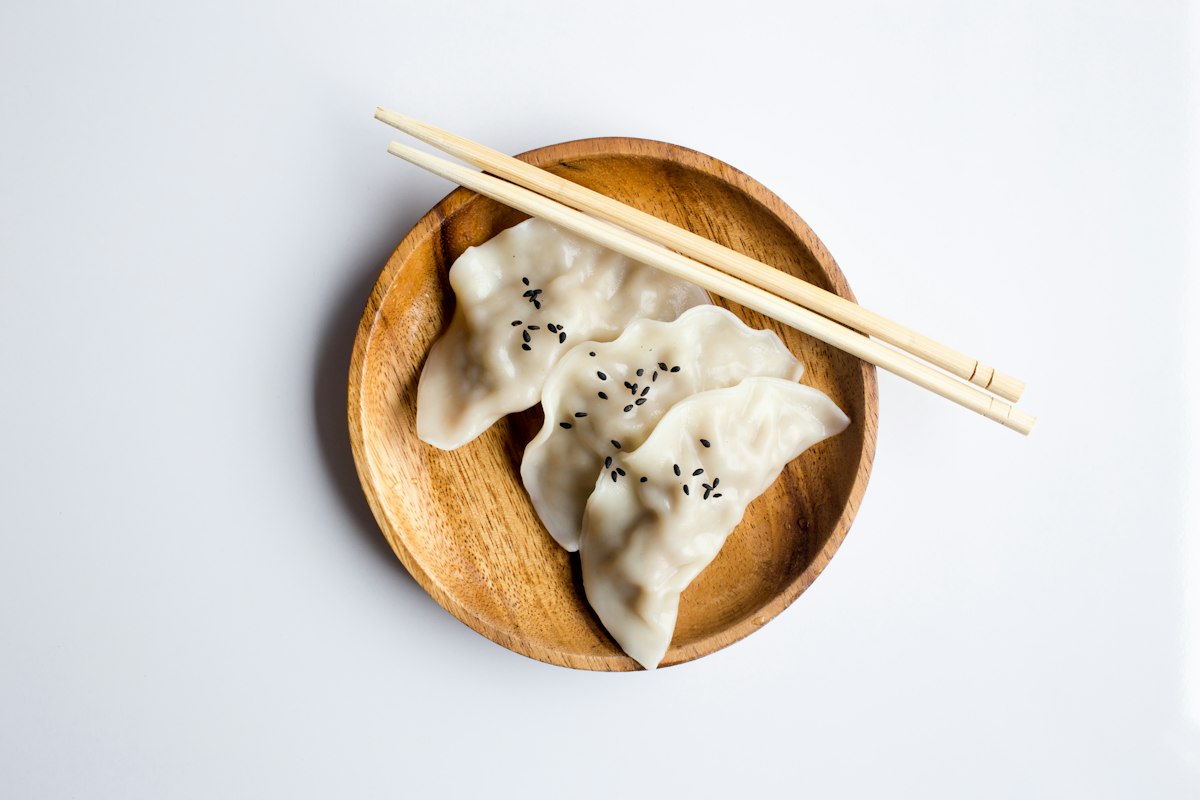
Few foods have traveled as far, adapted as gracefully, or generated as much passionate devotion as the dumpling. From the jiaozi of northern China to the pierogi of Eastern Europe, from the empanadas of Latin America to the samosas of South Asia, dumplings represent one of humanity's most universal culinary impulses: the desire to enclose a flavorful filling inside a protective wrapper of dough. Every culture that has flour, water, and a cooking technique involving moist heat has, independently or through trade, arrived at some version of this idea.
Chinese Jiaozi: The Ancestor of Them All
China is widely considered the birthplace of the dumpling, with archaeological evidence suggesting dumpling-like preparations date back over 1,800 years to the Han Dynasty. Jiaozi are folded dumplings with a thin, translucent wrapper made from wheat flour and water, filled with a mixture of ground pork, cabbage, and aromatics that has been seasoned with soy sauce, ginger, and sesame oil. The traditional crescent shape is created by folding the wrapper over the filling and pleating the edge with a distinctive crimping technique.
Chinese dumplings are cooked in three primary ways, each producing a distinctly different texture. Boiling creates the light, slippery skin of shuijiao — water dumplings. Pan-frying in a covered pan with a small amount of water produces guotie, or potstickers, with a crispy bottom and tender top. Steaming, as in xiaolongbao — the famous soup dumplings of Shanghai — produces a delicate, almost translucent wrapper that holds a burst of savory broth inside. Each method requires its own wrapper consistency and filling texture, making dumplings one of the most technically demanding crafts in world cuisine.
Japanese Gyoza: The Delicate Pan-Fried Derivative
Gyoza are the Japanese adaptation of Chinese jiaozi, introduced to Japan after World War II and transformed into something distinctly Japanese. The wrapper is thinner than a potsticker but thicker than a Shanghai-style dumpling. The filling traditionally combines ground pork, cabbage, garlic, ginger, and soy sauce, with a flavor profile that tends toward lighter seasoning than Chinese versions.
What defines gyoza most distinctly is the cooking method: they are almost always pan-fried on one side only, producing a crisp, golden bottom while the top steams gently. Gyoza are typically served as a shared appetizer — three or four per person — with a dipping sauce of soy, rice vinegar, and Lao Gan Ma chili oil. In Japan, gyoza are strongly associated with ramen shops and izakayas, where they arrive at the table in a hot iron pan, sizzling and aromatic.
Korean Mandu: Wrapped with Identity
Mandu are Korean dumplings that show both Chinese and Central Asian influence, reflecting Korea's position at crossroads of trade and culture. They are larger and more generously stuffed than their East Asian cousins, with a thicker wrapper that holds up well to boiling or pan-frying. The filling is typically a blend of ground pork or beef, kimchi, tofu, glass noodles, and scallions, giving mandu a complex, slightly spicy flavor profile that is uniquely Korean.
Mandu are traditionally served in two ways: in a clear beef or anchovy broth as a warming soup, or pan-fried as mandu bokkeum. They are also a beloved accompaniment to japchae, the sweet potato noodle dish that is a staple of Korean celebrations. Like jiaozi, mandu folding is a social activity — families gather around a table to fold hundreds of dumplings together, a tradition that turns cooking into connection.
Nepali Momos: Himalayan Comfort
Momos are the beloved dumplings of Nepal and Tibet, adapted by Nepali and Himalayan cuisine into a style entirely their own. The dough is typically made with less water than Chinese wrappers, resulting in a slightly thicker, chewier skin. The classic filling is water buffalo meat — or chicken in more accessible versions — mixed with onion, ginger, garlic, and herbs, though vegetarian versions with cabbage and paneer are equally popular.
Momos are almost always steamed, traditionally in a moster, a stacked bamboo steamer that allows multiple levels of dumplings to cook simultaneously over a single pot of boiling water. The signature accompaniment is a dipping sauce called achar — a fiery, tangy blend of tomato, chili, and Sichuan peppercorns that is nothing like the soy-based dipping sauces of East Asian dumplings. Momos are ubiquitous on the streets of Kathmandu, where vendors steam them fresh in the late afternoon and sell them by the dozen.
Italian Tortellini: Emilia-Romagna's Gift
In the food-obsessed region of Emilia-Romagna in northern Italy, dumplings reach their most refined expression in the form of tortellini. These tiny, hat-shaped pasta parcels are traditionally filled with a mixture of pork, prosciutto, and Parmigiano-Reggiano cheese, all finely ground and seasoned with nutmeg. The legend claims they were invented in Bologna or Modena to represent the belly button of Venus, though the truth is more mundane and likely involves medieval banquets where cooks stretched leftover meats into new forms.
Tortellini are always served in broth — a clear, rich chicken or capon stock that is itself a point of pride in the region. The pasta is cooked directly in the simmering broth, absorbing its flavor as it finishes cooking. A scattering of grated Parmigiano and a drizzle of melted butter is the traditional finishing touch. Tortellini in brodo is not just food in this region; it is a ritual, served at celebrations and eaten as a first course before the main dish in the traditional Emilian meal structure.
Polish Pierogi: Eastern European Comfort
Pierogi are the dumplings that introduced millions of Westerners to the concept of filled pasta, thanks in part to Polish-American communities that kept the tradition alive across generations. The dough is simple — flour, eggs, and a bit of sour cream for tenderness — rolled thin and cut into circles. The fillings range from the savory classics: potato and cheese (ruskie), sauerkraut and mushroom, ground meat, and buckwheat with fried onions; to sweet versions: strawberry, blueberry, and sweetened ricotta.
Pierogi are boiled until they float, then optionally pan-fried in butter until golden. The traditional accompaniment is a topping of fried onions and bacon, or a generous dollop of sour cream. In Poland, pierogi are not everyday food — they are associated with Christmas Eve (when meatless varieties predominate), weddings, and other celebrations. The Polish phrase "jak u mamy" — "like at Mama's" — is the highest compliment a pierog can receive, referring to the irreproducible comfort of a mother's cooking.
Russian Pelmeni: Siberian Strength
Pelmeni are the Russian cousins of pierogi, smaller, thinner-skinned, and almost always meat-filled. The traditional filling is a blend of three meats — pork, beef, and lamb — that provides a richer, more savory flavor than single-protein versions. The name derives from the Old Slavic word for "ear of bread," though the dumplings themselves look more like tiny, neat parcels.
Pelmeni are built for harsh winters and hard living — they freeze perfectly and cook quickly, making them an efficient source of protein and energy. It is traditional in Russia to make pelmeni in enormous batches, freezing them on trays and then transferring them to bags for storage. A pot of pelmeni can be on the table in 15 minutes from the freezer. They are served with sour cream, butter, or a splash of vinegar, and in some Siberian traditions, they are eaten in a broth made from the cooking water itself.
Latin American Empanadas: Hand-Held and Hearty
Empanadas — the Spanish word simply means "in bread" — are the Latin American contribution to the dumpling canon, a stuffed pastry that is baked or fried and entirely self-contained. The dough is made from wheat flour with the addition of fat (lard or butter), which gives it a flaky, pie-crust-like quality quite different from the soft wrappers of Asian or European dumplings. The fillings vary enormously by country and region: ground beef with olives and hard-boiled eggs in Argentina; chicken with peppers and cream in Chile; cheese and chorizo in Mexico.
Argentine empanadas are often baked, with a golden, flaky crust, while Central American and Caribbean versions tend toward deep-frying for an extra-crispy shell. The signature feature of many Latin American empanadas is the decorative fold — rather than a simple crimp, the edge is braided or decorated with a scalloped pattern that serves as both ornament and functional seal. They are a street food, a party appetizer, and a comfort food all at once, portable and satisfying.
Middle Eastern Sambousek and African Samosas
Sambousek are the Middle Eastern version of the dumpling, small, crescent-shaped pastries filled with spiced ground meat, cheese, or spinach. The dough is similar to empanada dough — flour and fat — and the cooking method can be either baking or frying. The spice profile is distinctly Middle Eastern: cinnamon, allspice, sumac, and pine nuts give these dumplings a flavor unlike anything in the Asian or European traditions.
Across the Horn of Africa and into South Asia, the samosa reigns supreme. The triangular, crispy pastry is filled with spiced potatoes and peas (in the vegetarian version) or spiced ground lamb or beef. What distinguishes the samosa is the dough — it is made with ghee or oil and water, rolled very thin, and then layered or twisted to create the characteristic flaky, shatteringly crisp shell. Samosas are ubiquitous across the Muslim world from Morocco to Bangladesh, each region adding its own spice signature to the filling.
Dumpling Dough Basics: One Foundation, Many Expressions
Despite the enormous variety in dumpling traditions worldwide, the basic dough principles are remarkably consistent. A simple mixture of flour and water forms the foundation, with eggs and fat added in many traditions to improve elasticity, tenderness, and flavor. The key variables are hydration (more water creates softer wrappers, less creates firmer ones), fat content (more fat creates flakiness), and resting time, which allows gluten to relax and the dough to become pliable without shrinking during shaping.
Asian dumpling wrappers tend toward higher hydration and no fat, creating soft, elastic skins that are rolled very thin. European pasta-style wrappers (tortellini, pierogi) typically include eggs and less water for a firmer, more pasta-like texture. Fried dumpling shells (samosas, empanadas) have high fat content for flakiness. Mastering one dough recipe and understanding how to adapt it gives you the foundation for exploring multiple traditions.
Building the Perfect Dipping Sauce
No dumpling tradition is complete without its dipping sauce, and this is where regional identities come through most clearly. Chinese jiaozi are served with a combination of black vinegar, soy sauce, and sliced ginger, sometimes with chili oil. Japanese gyoza get a more aggressive dipping sauce heavy on the vinegar. Korean mandu are served with a mixture of soy sauce, rice vinegar, sesame oil, and gochujang. Italian tortellini need nothing but the broth and butter they are served in.
The common principle across all traditions is balance: some element of salt (soy sauce, fish sauce), some element of acid (vinegar, citrus), some element of heat (chili, pepper), and often a flavor base of sesame or garlic. Adjust these four elements to match the flavor profile of your dumplings, and you have a sauce that elevates rather than overwhelms.